Ligurgia, Italy: Autostrada dei Fiori and Azzurra

This is a road for Ferraris. Just get rid of the other cars and the speed limits.

We drove from Grimaud to Lucca, which takes 5 ½ hours in the car. Two hours of this drive are on the Autostradas dei Fiori and Azzura, which run from the Italy/France border to about La Spezia, on the border of Liguria and Tuscany. When we were in Norway, the number of roadway tunnels south of Trondheim amazed us. I think the highway in Liguria surpassed the number of tunnels we travelled through in Norway. And when we were not in a tunnel, we were often driving on a viaduct bridge that crossed over an often ravine-like valley. Towns crowded the mouths of these valleys at the Mediterranean’s edge. Sightseeing if you are the driver is not advised. The road was rarely straight and you had to be constantly alert. The highway is a divided road with two lanes in each direction. That was the good part. There are no shoulders, only SOS pullout spots. The on and off ramps have very short merge/exit lanes with 90 degree turns, which means you have to be alert to slow cars if you are in the right lane when going through these zones. There was almost constant roadwork, so there was extra signage with different speed limits. The speed limits would shift from 60 to 80 to 90 to 110 to 130 in very short time intervals. I kind of gave up on worrying about the limit and drove an even 90 – 110 like most other people. Traffic itself was a challenge. There were the multitude of truckers who have a speed limit of 90 Kmh and the Mercedes owners who are flashing their lights behind you in the fast lane wanting to pass even if you are going 130 Kmh.  Weaving between the slow trucks in the right and getting out of the way of the speeders in the left lane meant lots of lane changing. It felt to me like driving on the Bay Bridge in San Francisco for two hours, with lots of curves thrown in. My hands were tired from gripping the wheel after this drive.

Oh, and as we found in France, the Autostradas in Italy are toll roads. The cost from the border to near Lucca was 32.50 Euro.

Thunderbolts and Lightning: Very, Very Entertaining

Grimaud – first week, week of October 7th

Our first week in Grimaud brought varied weather – 80 degree and sunny beach weather and two thunderstorms. Both thunderstorms started in the late afternoon and lasted past bedtime. Our house is on a hillside, and we have a fairly good panoramic view looking south and west, so we could see the cloud cells rolling over the countryside. The lightning was amazing. We had both the lightning bolts hitting the earth, and intra-cloud/sheet lightning. The sheet lighting kept the clouds lit up. The last time we saw such a light show was during our vacation in Minnesota 8 years ago. We just do not see this kind of lightning in California. The rain was heavy at times, but always was interspersed with dry patches. At one point in the late afternoon, a patch of blue sky appeared overhead. We could look up through the underlying black clouds to the puffy white tops of the cumulonimbus outlined by the bluest of skies. Thunder rumbled in the distance and we could see rain sheets falling on a ridge miles away. It was quite the performance by Mother Nature. We were lulled to sleep with flashes of light in the windows and the thunder rumbling. What was really nice is that each morning we awoke to blue skies and a beautiful day.

The Search for My Ancestors in Mortagne au Perche

While in Normandy, I wanted to check out an area called Mortagne au Perche about an hour west of Paris.  This is the region in France from where many of the French

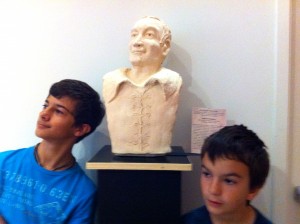
Jordan and Justin posing in front of statue of Zacharie Cloutier created by a local artist

Canadian ancestors emigrated. I was able to find some history on my mother’s side from a french canadian website of baptism records that led me to my 10th great grandfather,

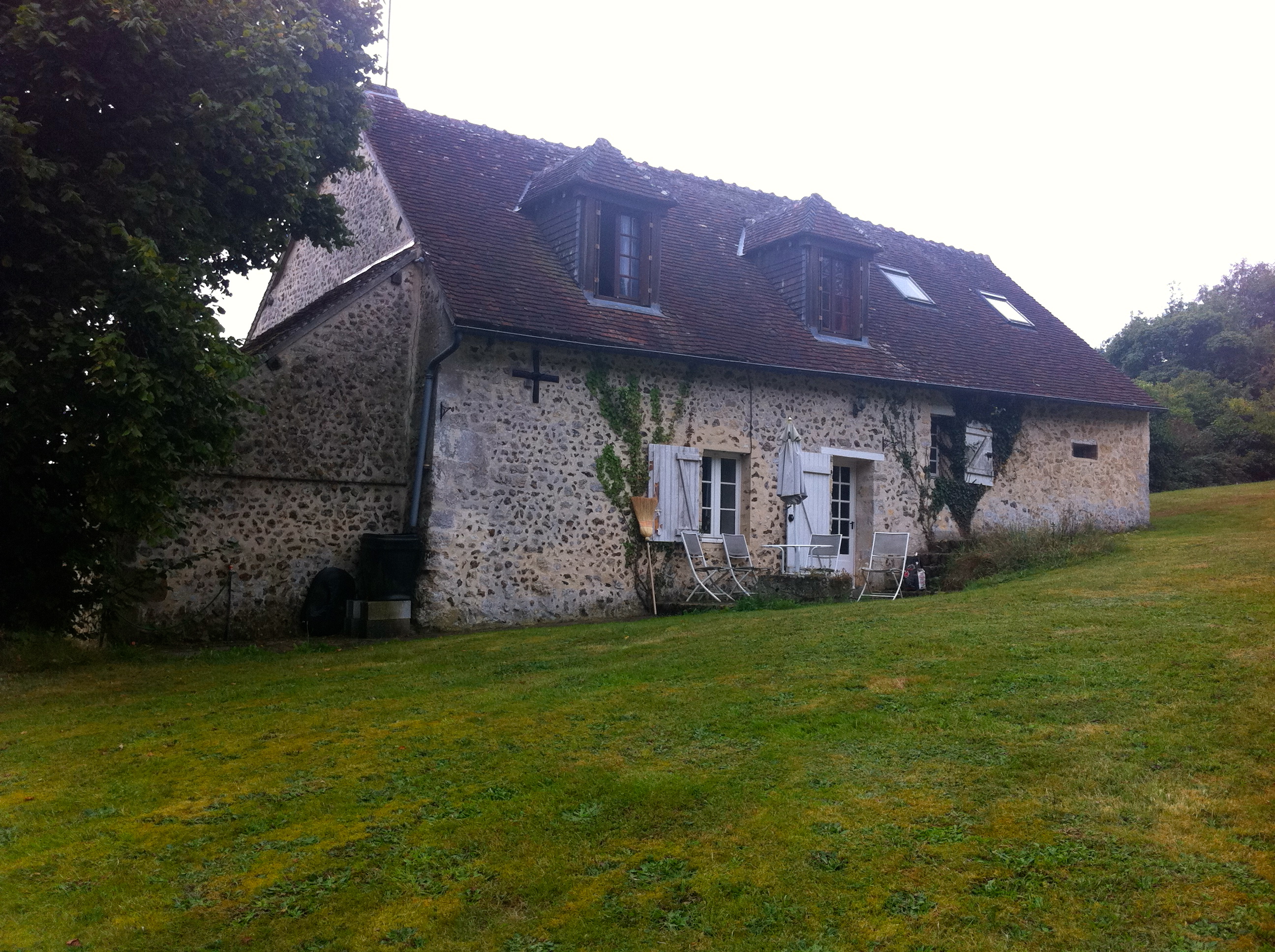
Zacharie Cloutier, who was born in Mortagne au Perche in 1590. Apparently,Zacharie was one of the first french pioneers to “New France” (Canada) in the early 1600′s. I was hoping to find some information about Zacharie while here and, at the very least, see the land from where he came.  We booked ourselves a little “gite” cottage in Colonard Corubert about 17 km from Mortagne.  It was a bit out of the way, but, it was a very special place.  It was called Le Chene, The Oak, because of all the oak trees on the property.

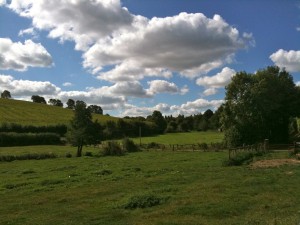
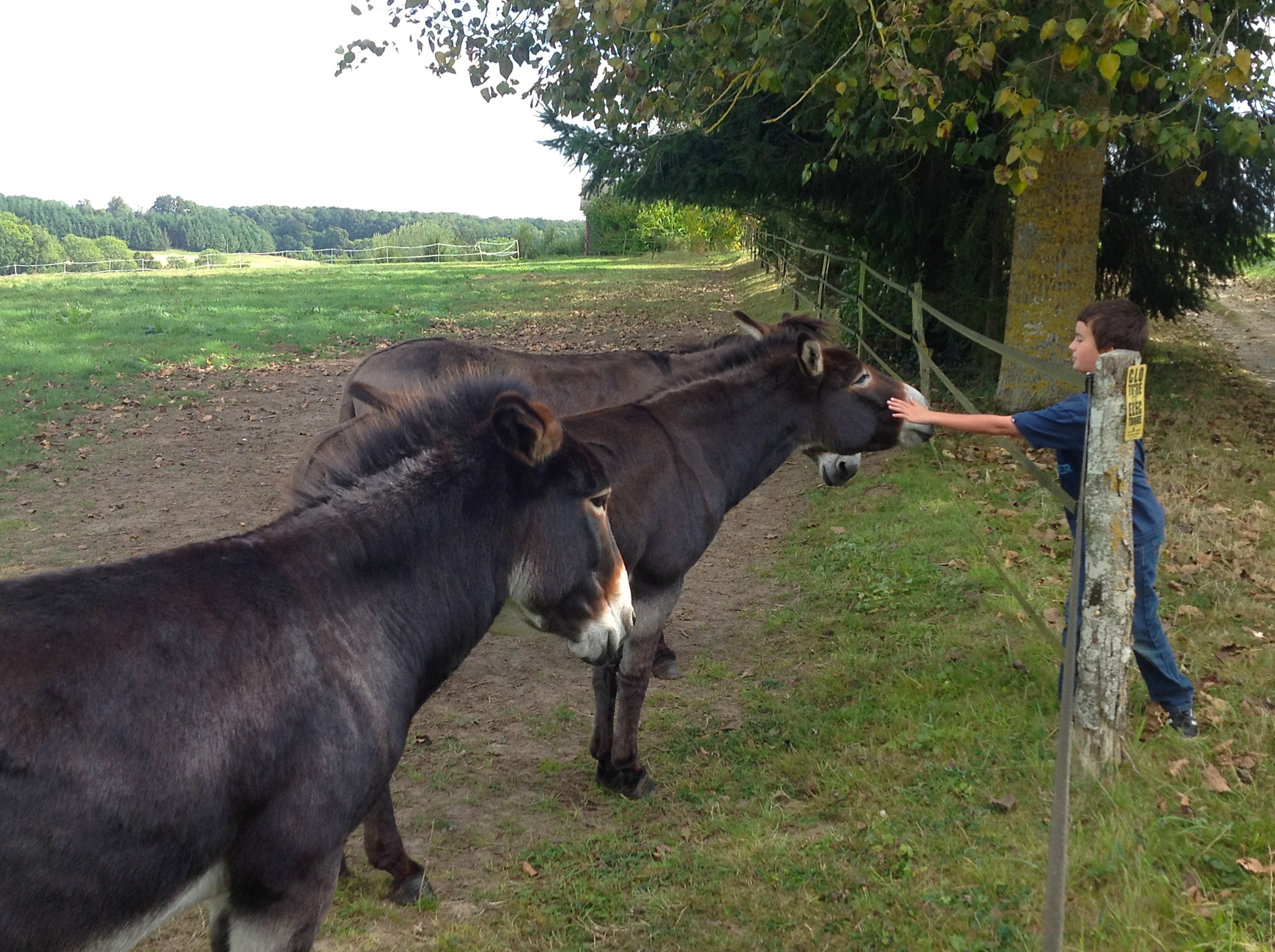
It was so comfortable and reminded me a lot of Grass Valley. The countryside was extremely beautiful. Rolling green hills, oak trees, old stone farms and lots of horses. This is where the beautiful Percheron draft horses come from.  We definitely enjoyed the rustic spaciousness of this gite after the little hotel room in Normandy. The boys settled right in and were asking to stay longer than 3 days. There were two dogs, 3 cats, and 3 chickens for them to play with. We had a 3 bedroom, 2 bathroom, 2 story cottage, 16thcentury, on a

hillside with views, horses in pasture across the driveway, a huge lawn area with old orchard fruit trees, and even a tennis court.  The owners were English/Scottish and lived on the property. There were 4 old houses on the property, apparently it was a little village in times past, but had been consolidated into one property. I really felt comfortable here and told the boys it was probably because Perche was where our ancestors came from. We would go back to Perche and this cottage in a heartbeat.

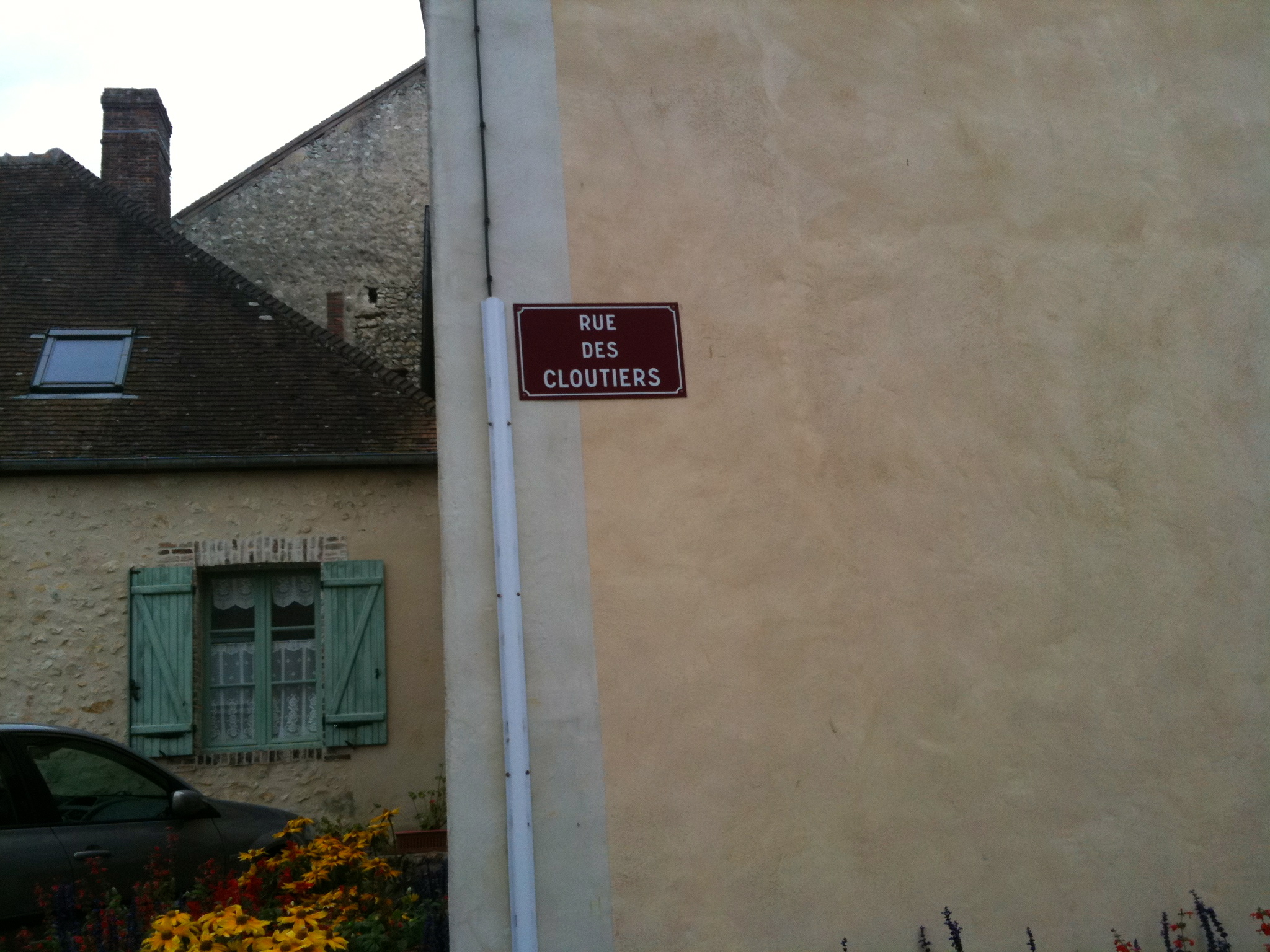
Not far from the cottage is an Emigration Museum in the town of Torouvre. This is where the history of the first pioneers to Canada is displayed.  The Cloutier name is all over the place.  I even found Rue des Cloutiers just down the street.  There was so much history here. 

Zacharie was a master carpenter in the area and was asked to go to Canada probably because of his skills. Apparently, the name Cloutier means “one who nails.” My grandfather, Ovide Cloutier descends from Zachary’s son Charles.  I have all of the Cloutier names through the generations down to my mom. The only thing I was not able to find was the burial place of Zacharie’s parents, Denis Cloutier and Renee Briere.  I spoke with the City Hall in Mortagne au Perche and apparently, in those days, the practice was to use the same grave site in the church yard over and over again. So, even though I know that they were supposedlyburied in St. Jean de Baptiste parish, I was not able to find them.

At the museum, we found a write up about Zacharie Cloutier and how he was one of the first immigrants to French Canada.

This has been an interesting journey into my past and I am so happy to have had the chance to visit this area.  Zacharie must have been a very courageous and strong person to leave his homeland for a new adventure in the untamed wilderness of Canada.  He also must have had a strong sense of family because he did not want to leave them behind, but instead, brought all of them with him on his first trip across. He was very successful in the new land and lived to be 87 years old.

Foie Gras: To eat or not to eat?

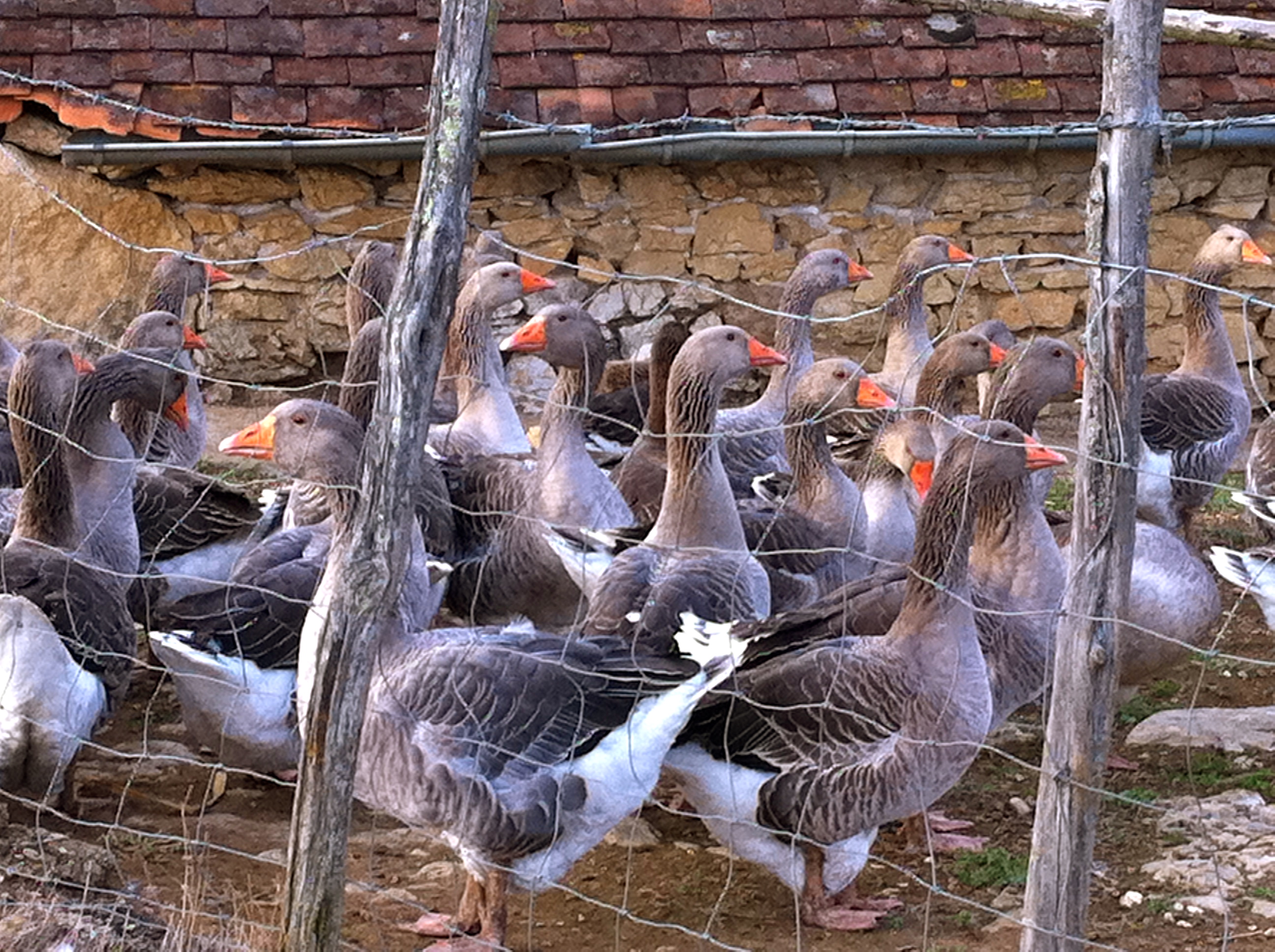
A small foie gras farm operation where the geese get to live outside. If we buy foie gras, we will buy it from a farm like this nearby.

Different people may see this question as dumb from different perspectives. For the serious foodies…duh…of course we should be eating fois gras. The Perigord is the epicenter of fois gras. The little cans and glass jars with goose liver packed in goose fat are ubiquitous. All the perigordian prix fixe menus start with fois gras as the appetizer. Yet, I have not ventured past a small taste of the brown, creamy stuff at a vendor’s table at the Sarlat Saturday market. Perhaps because I have been on the other side of the question. No one I know eats fois gras. It is even banned in restaurants in my home state since this July. Which if you think about it is a prime example of over-legislating and fawning to special interest groups like PETA. Silly politics aside, it just sounds weird eating distended goose livers. Animal organs are just not my thing, nor Gigi’s. However, after much caucusing with Gigi about this, we have decided we just cannot leave the area without buying a few cans of fois gras. Something to bring out when we are doing some special entertaining with friends and we want to show them how refined our palates are. ‘Perigord fois gras? Mais oui! Only the finest for our friends! Bon appetite.”

Justin’s Blog: Lascaux II and Font de Gaume cave

This week we went to Lauscaux II and Font de Gaume caves. Lascaux and Font de Gaume are located in France in the Vezere valley. The caves were formed in an area of limestone rock. cro-magnon man made the cave paintings. The paintings were made 17,000 years ago. Lascaux II is actually a copy of the Lascaux cave. Why? Lascaux cave was closed to the public because the ‘white disease’ from too many visitors was making the paintings disappear. Lascaux II is made of concrete and iron, and artists made copies of the original cave paintings. Lascaux cave has 900 animal paintings. There are paintings of bulls, horses, deer, goat, and wooly rhino. Font de Gaume is a real cave that people can walk into and look at real prehistoric cave paintings. Font de Gaume used to have a lot of stalactites, but people took them out to make it easier to walk into the cave. Font de Gaume has 230 animal paintings. There are pictures of mammoth, horses, bison and deer. Cro-magnon man used red, orange, white, black and brown colors made from minerals to paint. Cro-magnon man engraved the rock, used animal skin dabber brushes, blow pipes from animal horns, and their fingers to apply paint. I think cro-magnon man painted the animals as Art and to promise good hunting.