This blog post is a bit bitchy as I am complaining about the driving. Sammy H would hate driving in Norway!
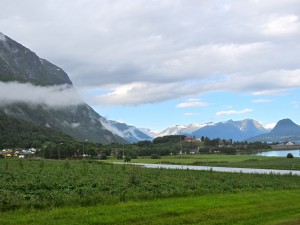
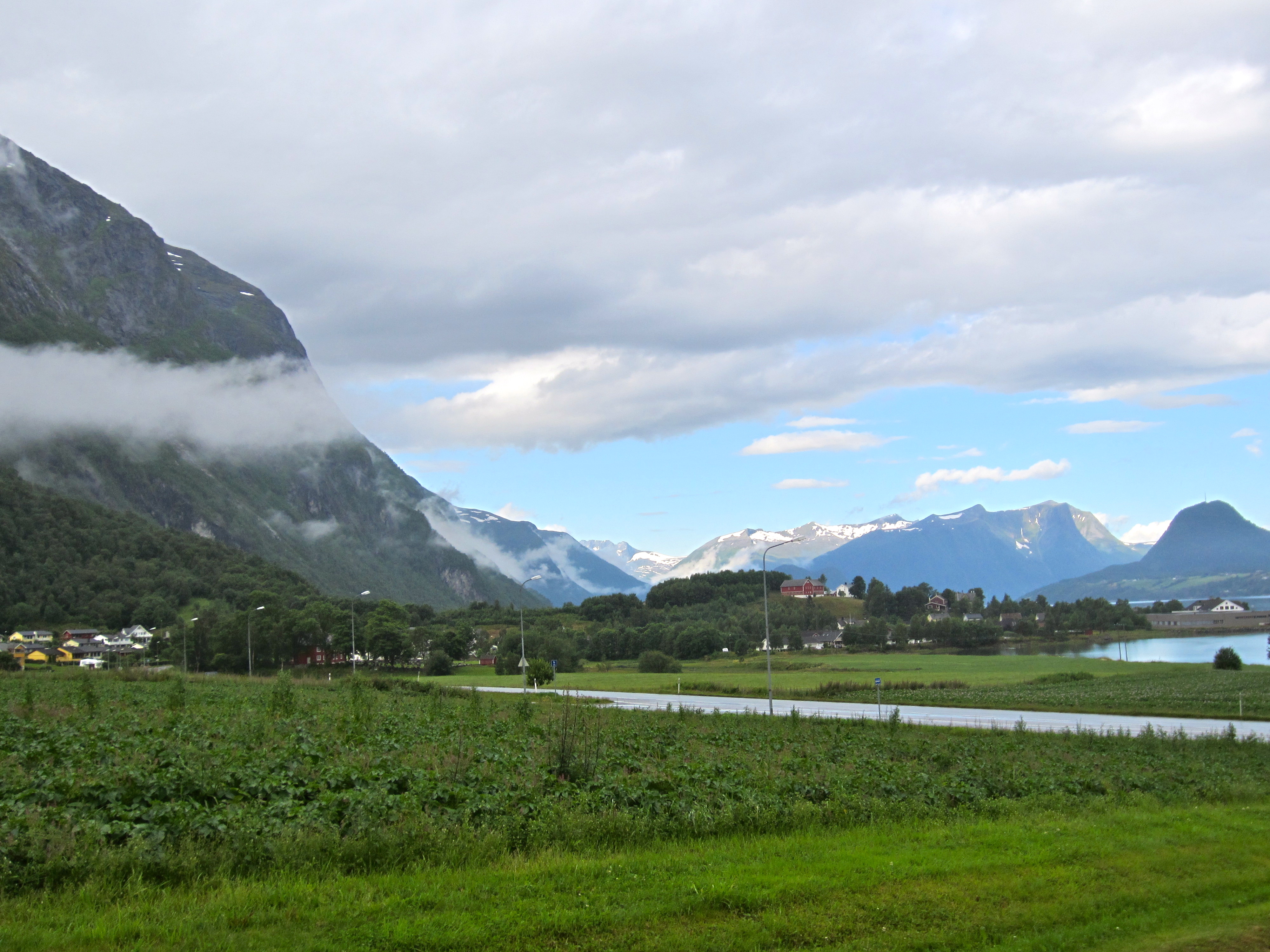
View from our Hostel
Norwegian Fjordland. Sandwiched between all those spectacular mountains and the fjords and the sea are all these small, windy roads. My Swedish friends warned me about the roads, but you really have to experience them to understand just how difficult it is to get from point A to point B in the Fjordlands. One of the reasons we set up base camp at Andalsnes, and did not drive to other fjords areas was the fear that we would have too much trouble getting out of them and setting ourselves up for the long drive back to Stockholm.
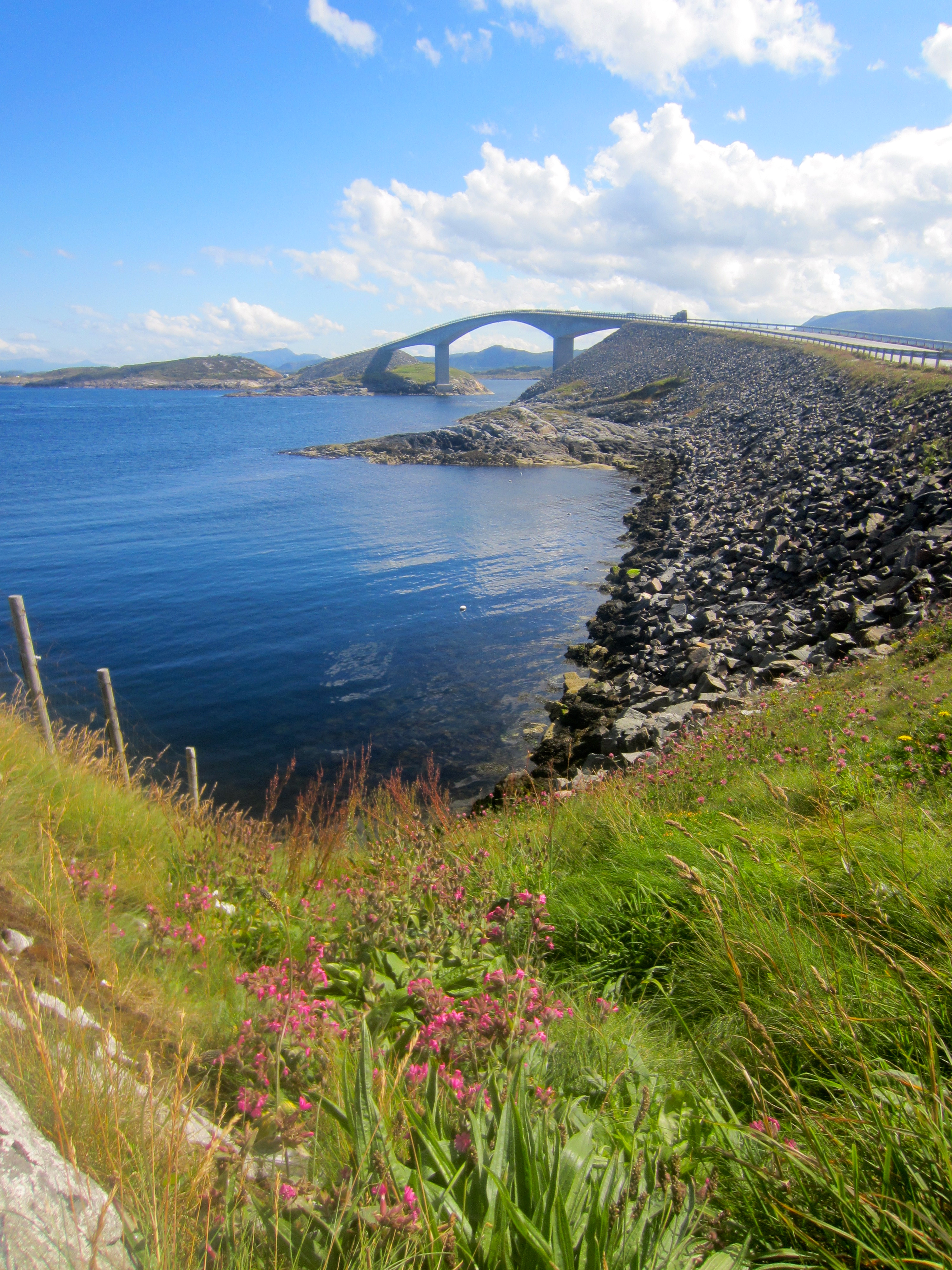
Yesterday was a doozy. We wanted to drive the ‘Atlantic road’ near Kristiansund. It is
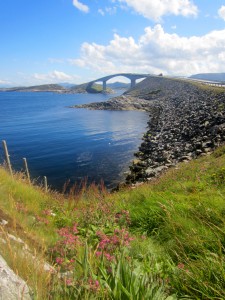
The start of the Atlantic Road.
listed as one of Norway’s 16 National Tourist Roads, and you see the road featured prominently in local tourist info brochures. It was pretty cool, all 8 km. The road hopped along little islands, only open Atlantic ocean to the west. However, it put us on a route that was long and slow.
Toll roads and ferries. Expensive! The other thing our friends warned us about is how expensive Norway is. Not only do you have the food, accommodation ($180 for a Youth Hostel), and gasoline (at over $8 a gallon), the toll roads and ferries will get you good. Two ferry rides and 3 pay tunnels got us back on the mainland and the main road to Trondheim.
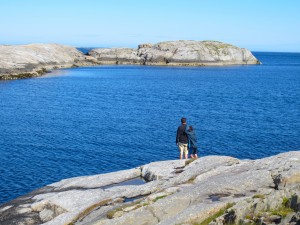
Stoping to wave at Maine across the Atlantic
Then in the Trondheim area the automatic toll stations reappeared. We had experienced these outside of Olso. You see a sign that tells you that a toll station is approaching and the cost. Your car gets its license plate photographed, which we were also warned about but did not get the information on how to pay these tolls. All we knew was that heavy fines would come through the car rental agency if we did not pay them. That had us freaked out for the first day of driving in Norway. These auto toll stations seemed to be set up every 10 kilometers or so on one stretch of highway. The tourist information office in Andalsnes did give us a brochure explaining how to set up an online payment subscription, pretty much like FastTrak in the Bay Area. In Trondheim, these tolls stations reappeared, and again they were like every 10 km. The toll is for the tunnels. And man, the Norwegians have bored a lot of road tunnels through the granite rock. Several were 3 to 7 km long. Two of them went under the water. While we were inside, and we had a long time
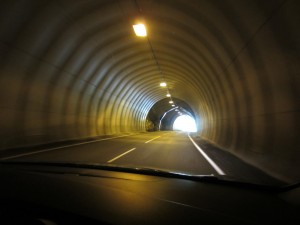
Light at the end of the tunnel! After 6km, this is a reassuring site.
inside some tunnels to ponder this, we marveled at the engineering feat and really did not begrudge the tolls that were being levied to pay for these engineering marvels. We probably spent close to $100 dollars in tolls and ferry fees yesterday.
Speed limits. I cannot tell you how liberating – in a road warrior sense – it felt when we crossed the border back into Sweden. The road straightened out, it got wider, and the 80 km speed limit sign did not stop me from driving 100 km.
You just cannot cover much distance on a map in Norway. The normal speed limit on the roads in Fjordlands was 60 km – 36 miles an hour. It took us 8 hours to drive from Andalsnes through Kristiansund to Trondheim (with stops of course, that darned outstanding scenery). The ‘normal’ main roads between towns cap their speed limits at 80 km, and they often drop down to 60 km in every town you drive through. 80 km – that is 48 miles per hour, 60 km – 36 mph.
We found lots of speed cameras along the way. The nice road authorities give you a warning with a blue sign with a camera on it, maybe a half kilometer before the camera, but you do have to slow down. Of course, nobody is driving the speed limit because it is so low. The low speed limit must make sense for the 8 months when the weather is crap here, but not in summer time. This was another little stress point at first, because I did not fully clue into the cameras, and since traffic was over the speed limit and I was pacing the other cars, for the first day of driving I was passing these cameras driving over the speed limit. Oh well, I can just hope now that I don’t get a ticket billed to my credit card. With the traffic cameras and the toll cameras, it felt a little like big brother watching me while I drove through Norway. However, as Gigi told me while we paying yet another toll, “Just think of it as the price of admission to see this beautiful place.” And she was right!
Final mileage for the trip to Norway was 2,313 km…thats 1,437 miles in 6 days! Whew!
 expensive or if its just too far away in another country. No matter the case, it is truly a once in a lifetime experience. This year I am at the London 2012 Olympics. I’m having that very same experience. The first event we went to was tennis at Wimbledon. As a tennis player I was naturally excited to see this event. I have never before witnessed Top 10 tennis and did not know who I was going to see in this round of the semi finals. It turned out we were on center court and were seeing both men’s and women’s singles. As we entered the complex there was a big green board that posted who was playing on what court. I jumped up and down with excitement because I was not going to see Top 10 tennis, I was going to
  see Top 5 tennis! The matches were Roger Federer vs. Juan Martin del Potro, Serena Williams vs. Victoria Azarenka and Andy Murray vs. Novak Djokovic. Anyone who follows tennis knows why I was so happy. To see all of them in one day playing at Wimbeldon is amazing.
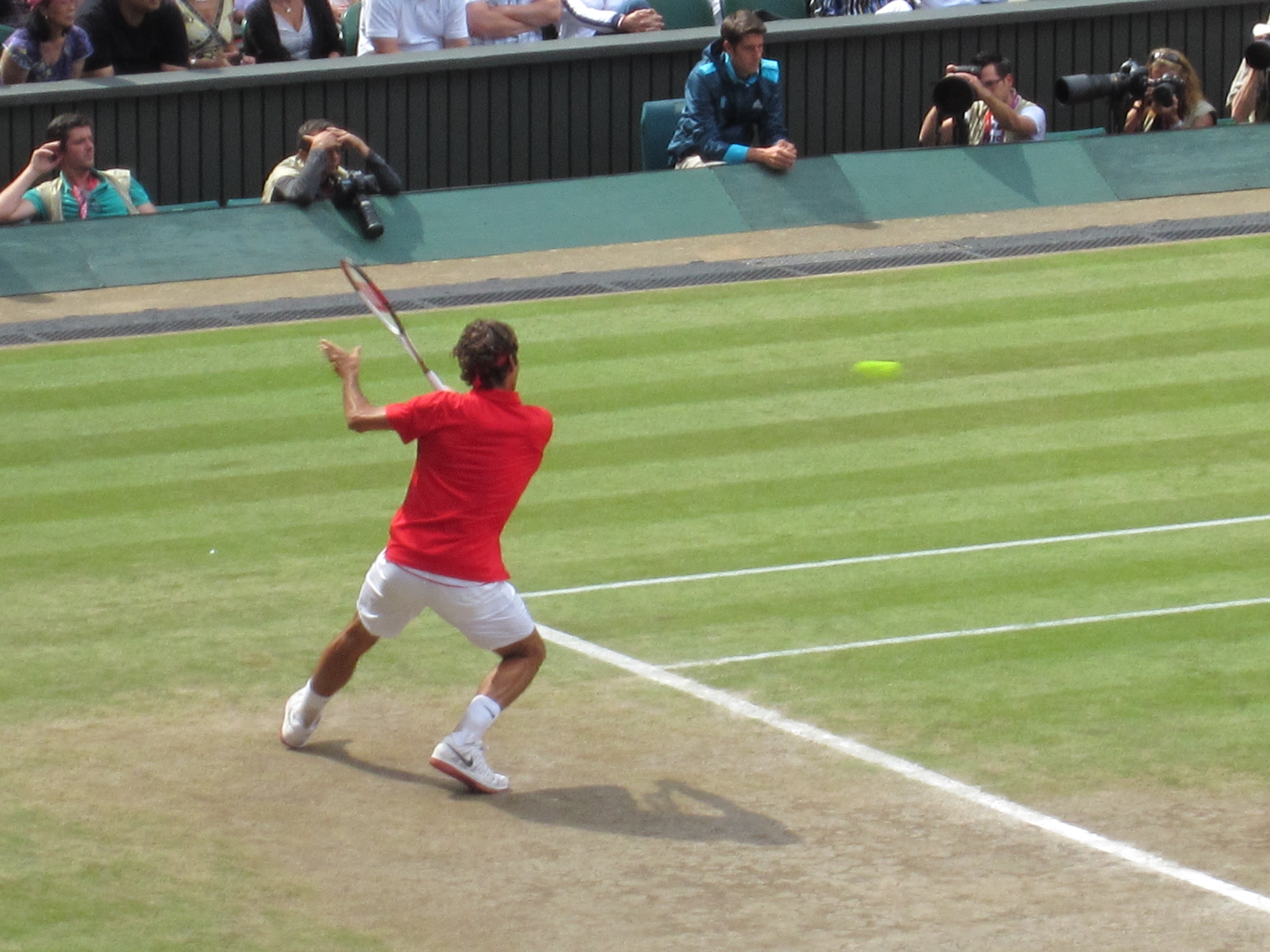 in the first set. Then, Federer won the second set and eventually won the third. The match took 4 ½ hours! Next, Serena Williams completely walked over the #1 player in the world, Victoria Azarenka in two sets. Last, Andy Murray took on Novak Djokovic, the #1 men’s singles player. Not a very good player on grass, Djokovic fell behind at the crucial
  moments of each set. The crowd cheered on Andy Murray, the home country favorite. He beat Djokovic in two sets, which made me sad, because I was rooting for Djokovic.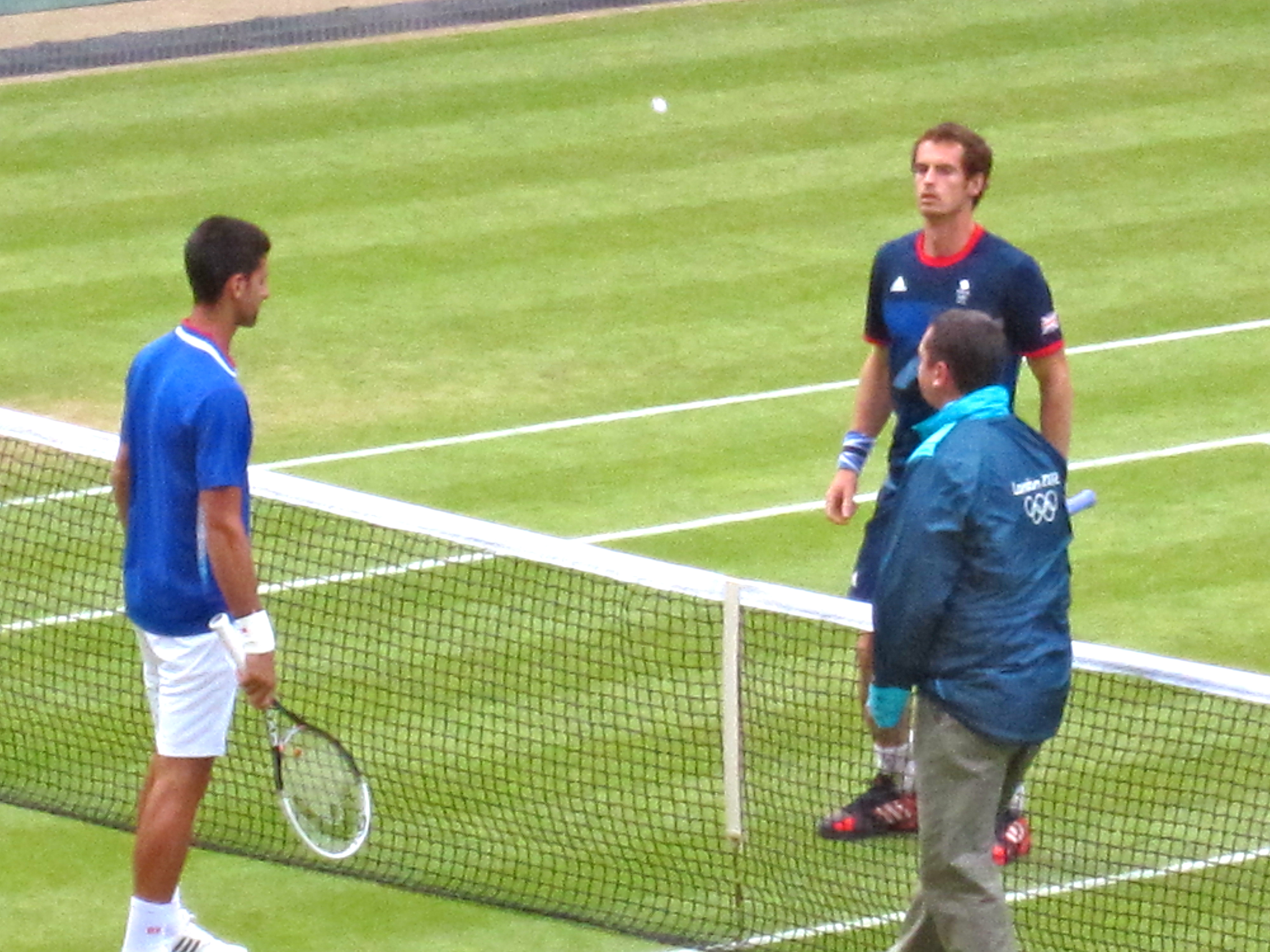
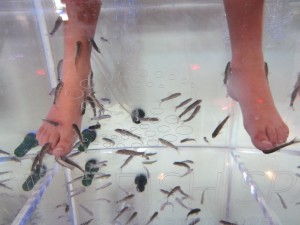 The little fish did a good job because our feet felt really smooth afterwards! I don’t think you’d ever find this in the USA. Check it out at www.smilefishspa.com

 border and then stopping again to get our passports stamped at the Duty Office. We finally arrived at the Are Youth Hostel around 8pm. It was closed – completely quiet and no one around to speak with. Sigh. It was a Sunday and we had been warned about things shutting down early in Norway, we didn’t think Sweden would have the same customs. So, worried we would be stuck with a $400 plus a night hotel room, we started driving around Are…in the rain. Down the hillside by a lake we could see a large building that said “Holiday Club” across the front with a huge covered waterslide in the